Region IV: North America, Central America, the Caribbean
The region's geographical extent and great diversity include ecosystems from the Arctic to the equator, such as tropical forests, islands, deserts, snow-covered landscapes and high mountains, representing a wide range of weather, water, and climate challenges.
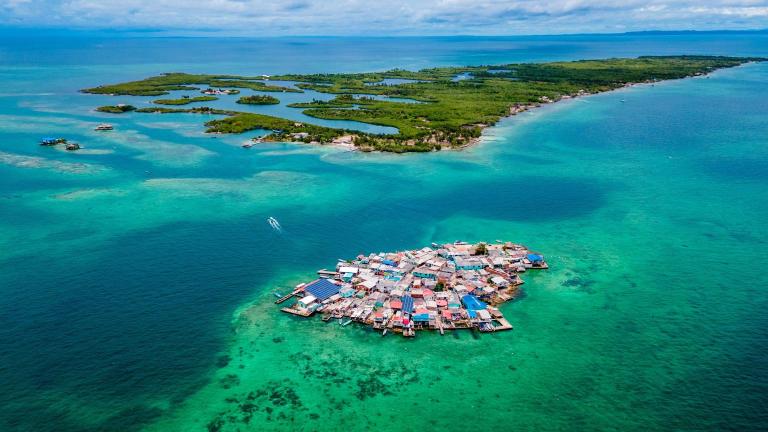
Islet of Santa Cruz Island in the middle of the sea, in the background the island of Tintipan seen from the air in the archipelago of San Bernardo near the Rosario Islands in Cartagena, Colombia.
Adobe Stock Jhampier Giron
The WMO Region IV comprises 27 Members that fall within the scope of the WMO Regional Office for the Americas (RAM), which are served through the Representative Office for North America, Central America and the Caribbean (NCAC).
Due to its geographical complexity, the region is highly vulnerable to extreme weather events such as tropical cyclones, droughts, floods, coastal surges, tornadoes and others, all of which are exacerbated by climate change. This situation calls for a multi-hazard early warning system and robust hydrometeorological services.
In terms of socio-economic parameters, WMO Region IV is composed mainly of developing economies many of which are small island developing states, but it also includes large developed countries, and on the opposite side it has least developing countries. This is reflected in the Human Development Index that ranges from very high human development to low human development in the region.
To facilitate the exchange of data and expertise to better prepare the region, the WMO Regional Office for the Americas articulates activities with key partners such as the National Oceanic and Atmospheric Administration (NOAA), the National Aeronautics and Space Administration (NASA), the Caribbean Meteorological Organization (CMO), the Coordination Centre for the Prevention of Natural Disasters in Central America (CEPREDENAC), the Caribbean Institute for Meteorology and Hydrology (CIMH), the Regional Committee on Hydraulic Resources (CRRH), the Caribbean Disaster Emergency Management Agency (CDEMA), the United Nations Economic Commission for Latin America and the Caribbean (ECLAC), the United Nations Office for Disaster Risk Reduction (UNDRR), the UN Environment Programme, the Food and Agriculture Organization (FAO), among others. The focus is also on socioeconomic factors to contribute to the UN 2030 Agenda on Sustainable Development.